Healthy trees add shade, beauty, privacy, and value to your property. However, trees need regular care to remain strong and safe. Dead branches, weak limbs, overgrown growth, and crowded canopies can create problems for homeowners, especially during severe weather.
Professional tree pruning is one of the most effective ways to maintain the health, structure, and appearance of mature trees. When performed correctly, pruning can remove hazardous growth, improve airflow, allow more sunlight into the canopy, and encourage healthier development.
For homeowners in Leesville and the surrounding Batesburg-Leesville area, understanding when and why trees need pruning can help prevent expensive property damage and preserve valuable landscape features. Professional tree care providers serving the area use site assessments, appropriate equipment, and established pruning techniques to address individual tree conditions.
What Is Tree Pruning?
Tree pruning is the selective removal of branches, limbs, or other growth to improve a tree’s health, structure, safety, or appearance. Unlike simply cutting branches back, proper pruning requires understanding how trees grow and where cuts should be made.
Common pruning tasks include removing deadwood, damaged limbs, diseased branches, crossing branches, and growth that interferes with buildings or other structures.
A professional assessment can also determine whether a tree needs crown thinning, corrective pruning, clearance work, or another type of maintenance. These techniques are designed to address specific problems rather than removing healthy growth unnecessarily.
Why Is Tree Pruning Important?
Trees naturally develop dead branches and irregular growth as they age. Storms, insects, disease, construction activity, and environmental stress can also affect their structure.
Regular maintenance can address these problems before they become more serious. Proper pruning may help:
- Remove dead, broken, or hazardous limbs
- Improve the overall structure of a tree
- Increase sunlight penetration
- Improve air circulation through dense canopies
- Reduce the risk of falling branches
- Keep branches away from roofs and structures
- Improve the appearance of the landscape
- Support long-term tree health
Local tree care services in Batesburg-Leesville specifically emphasize canopy management, deadwood removal, corrective work, and storm-risk reduction as important components of professional tree maintenance.
5 Major Benefits of Professional Tree Pruning
1. Helps Protect Your Property
Branches growing too close to a roof, driveway, fence, or other structure can become a problem as the tree grows. Weak limbs may also break during strong winds or storms.
Removing selected hazardous branches can reduce potential risks. Trees near homes, vehicles, walkways, and utility infrastructure deserve particular attention because a falling limb can cause significant damage.
If a tree has suddenly developed cracks, hanging branches, major deadwood, or storm damage, professional evaluation is especially important. Recent tree-care guidance also identifies dead or dying limbs, split trunks, fungal growth, and storm damage as warning signs that may require professional attention.
2. Supports Better Tree Health
Removing dead or diseased branches can help maintain a healthier canopy. It also allows professionals to identify structural issues, decay, pest activity, or other visible concerns during an inspection.
However, more cutting does not necessarily mean a healthier tree. Removing too much live growth can place unnecessary stress on the plant. That’s why selective pruning is generally preferable to aggressive cutting.
The goal should be to remove problem growth while preserving the tree’s natural structure and healthy branches.
3. Improves Airflow and Sunlight
A dense canopy can prevent adequate sunlight and air movement from reaching interior branches and nearby landscaping.
Crown thinning can selectively reduce excess branches while maintaining the tree’s natural form. Better light penetration can benefit lawns, gardens, and plants underneath the canopy, while improved airflow may create a healthier growing environment.
Professional tree care services in the Leesville area include crown thinning and canopy management for this reason.
4. Enhances Curb Appeal
Well-maintained trees can make a property look cleaner and more attractive. Overgrown or poorly structured branches can make even a well-maintained yard appear neglected.
Selective pruning can help restore a balanced canopy and improve the visual relationship between trees, buildings, driveways, and landscaping.
For homeowners considering selling their property, maintaining mature trees can also contribute to overall landscape presentation and curb appeal.
5. Encourages Stronger Structure
Young and mature trees can develop competing leaders, crossing limbs, weak branch unions, or uneven growth. If these structural problems are ignored, they may become more difficult to correct as the tree gets larger.
Corrective pruning can address selected structural issues while the tree is still manageable. Early attention may reduce the likelihood of larger problems developing later.
When Is the Best Time to Prune Trees?
The ideal timing depends on the tree species, its condition, the reason for pruning, and local weather conditions. There is no single pruning schedule that works for every tree.
For many trees, major structural work is often better performed during dormant periods because the tree is not actively producing large amounts of new growth. However, damaged, hazardous, or diseased branches may need attention regardless of season.
Recent arboricultural guidance notes that fall or winter can be favorable for many types of structural pruning, while specific species and circumstances may require a different approach.
Instead of choosing a season based solely on a calendar, homeowners should have the tree evaluated based on its species, health, structure, and immediate needs.
Signs Your Tree May Need Pruning
Not sure whether your trees require professional attention? Look for these common signs:
Dead branches: Bare, brittle limbs may eventually fall.
Broken limbs: Damage from storms or wind can leave branches unstable.
Branches touching your roof: Growth close to a roof can increase the risk of damage.
Crossing branches: Rubbing limbs can create wounds and weaken the tree’s structure.
Dense canopy: Excessive growth can reduce sunlight and airflow.
Branches near utility lines: Trees growing close to electrical infrastructure require professional handling.
Sudden leaning or structural changes: These may indicate a potentially serious stability issue.
If several of these conditions are visible, scheduling a professional assessment is a sensible next step.
Tree Pruning vs. Tree Trimming: What’s the Difference?
The terms “tree pruning” and “tree trimming” are often used interchangeably, but they can describe slightly different goals.
Pruning generally focuses on tree health, structure, and the selective removal of problematic growth. Trimming may place greater emphasis on controlling overgrown branches, maintaining clearance, and improving appearance.
In practice, professional tree care can combine several techniques depending on the condition of the tree. Services in the Leesville area may include crown thinning, clearance trimming, corrective pruning, and limb removal.
Why DIY Tree Pruning Can Be Risky
Small branches that can be safely reached from the ground may seem easy to remove. Larger trees, however, can present serious hazards.
Working from ladders, using chainsaws at height, cutting large limbs, or working near power lines can result in injuries and property damage. Incorrect cuts can also create long-term problems for the tree.
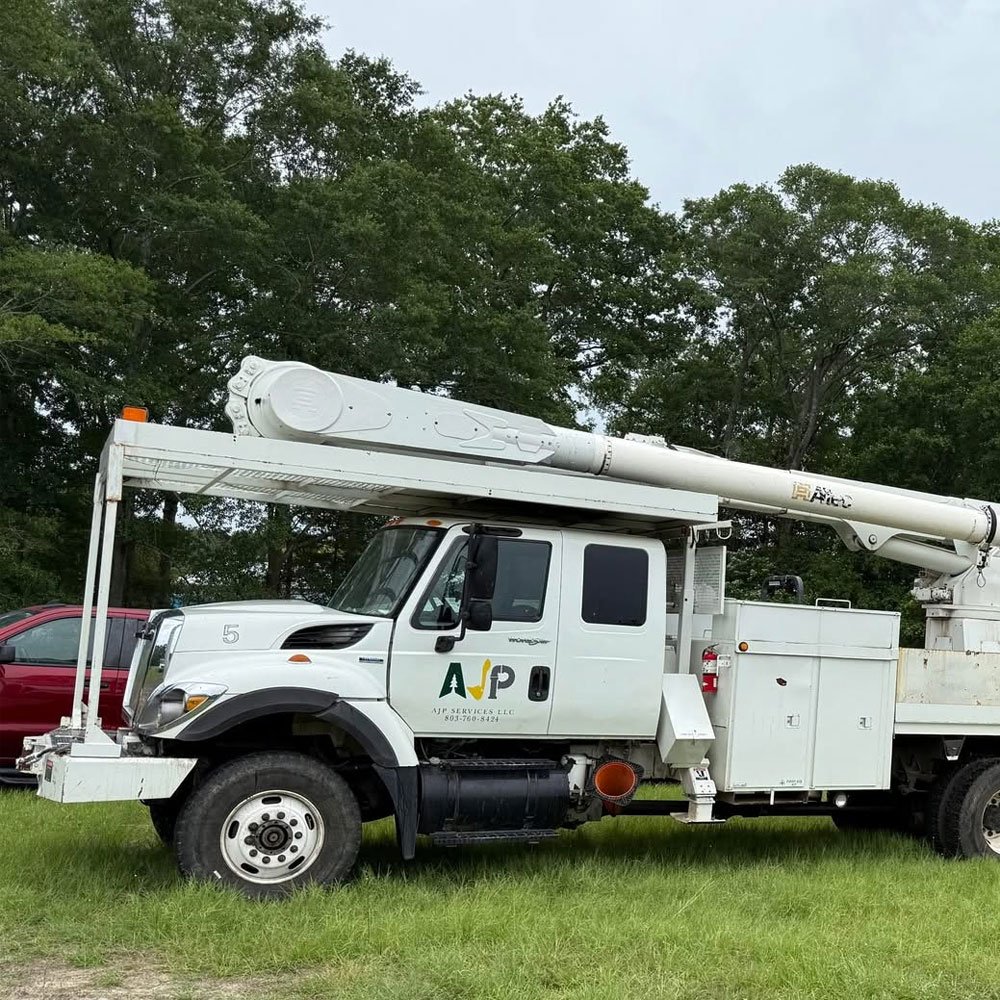
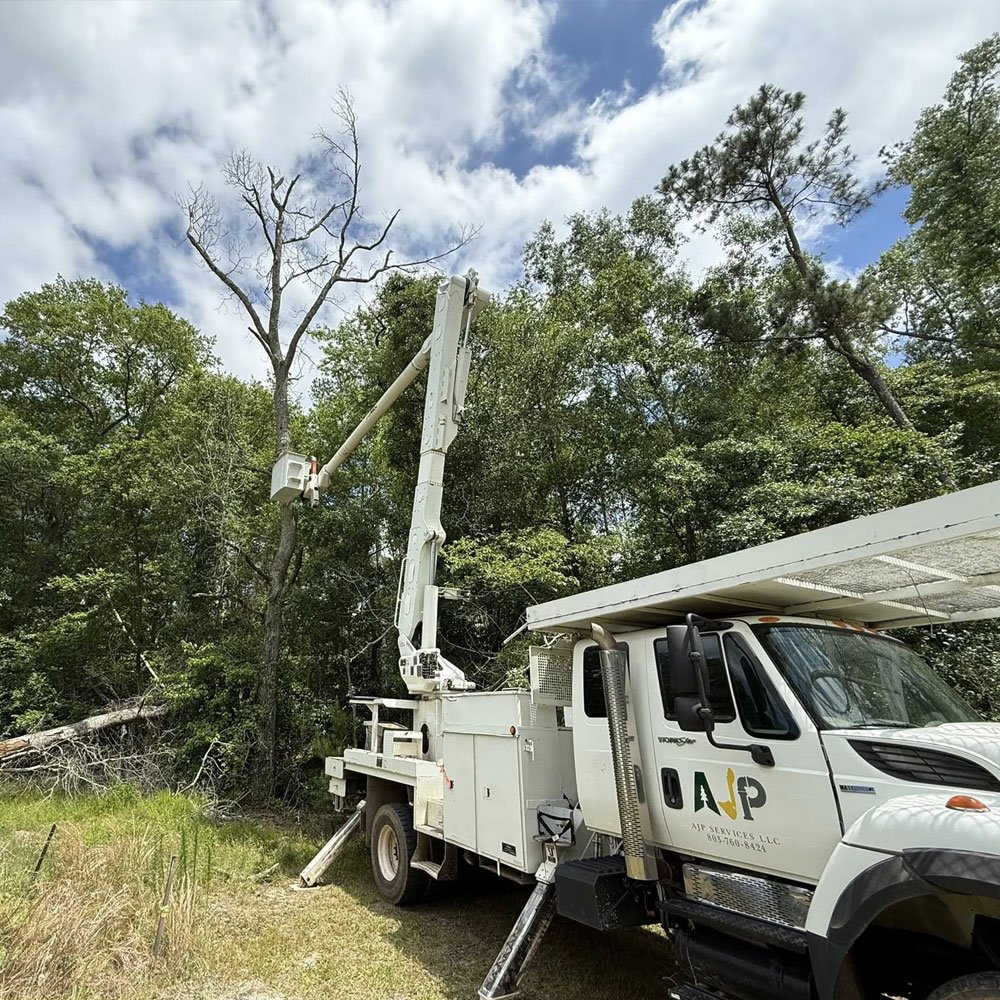
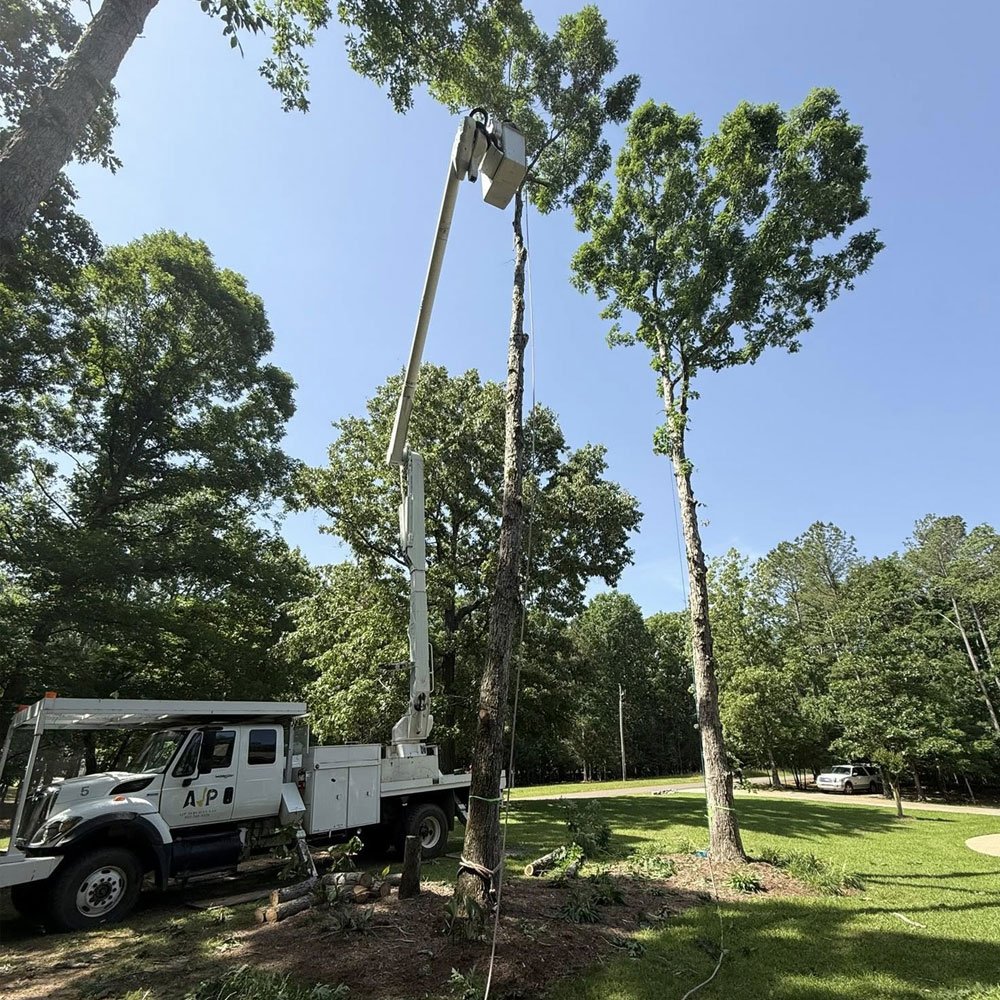
Professional crews have specialized equipment and safety procedures for complex tree work. AJP’s service information also emphasizes trained personnel, modern equipment, safety-focused procedures, and insurance coverage for its tree-care work.
For branches close to electrical lines, homeowners should avoid attempting the work themselves and contact qualified professionals.
What to Expect From a Professional Tree Care Visit
A quality pruning project should begin with an assessment rather than immediate cutting.
A professional may evaluate:
- Tree species and overall condition
- Branch structure and canopy density
- Dead or damaged limbs
- Proximity to buildings and other structures
- Utility-line clearance
- Potential storm hazards
- Access to the work area
- Cleanup and debris requirements
After the evaluation, the appropriate pruning method can be determined. Professional services may include preparation, selective cutting, debris hauling, and a final quality check. Local service information describes a structured process designed to assess the property and complete cleanup after the work.
How Often Should Trees Be Pruned?
There is no universal schedule. Young trees, mature trees, ornamental varieties, fruit trees, and trees exposed to storm damage can all have different maintenance needs.
Instead of pruning simply because a certain amount of time has passed, inspect trees regularly for deadwood, structural problems, excessive growth, and clearance issues.
A professional assessment can help determine whether a tree requires immediate work or can remain on a longer maintenance schedule.
5 Frequently Asked Questions
1. How do I know if my tree needs pruning?
Look for dead or broken branches, crossing limbs, excessive canopy density, branches touching structures, or growth interfering with walkways and utilities. A professional inspection can identify less obvious structural problems.
2. What is the best season for tree pruning in South Carolina?
Timing depends on the species and purpose of the work. Dormant-season pruning can be appropriate for many trees, while damaged or hazardous branches may need immediate attention. A tree professional can recommend the right timing for your specific tree.
3. Is tree pruning different from tree removal?
Yes. Pruning selectively removes branches while keeping the tree intact. Removal involves taking down the entire tree and is generally considered when a tree is dead, severely hazardous, diseased, or otherwise unsuitable to remain.
4. Can I prune a large tree myself?
Large-tree work can be dangerous because of falling branches, chainsaw hazards, ladders, and nearby structures or utility lines. Professional equipment and experience are recommended for complex or elevated work.
5. How much does tree pruning cost in Leesville, SC?
The cost depends on factors such as tree size, species, number of branches, accessibility, condition, and the complexity of the work. An on-site assessment is the best way to receive an accurate estimate.
Conclusion
Regular tree maintenance can protect your landscape while helping mature trees remain healthy, attractive, and structurally sound. Addressing deadwood, weak limbs, dense growth, and clearance concerns early can also reduce the chance of more serious problems later.
For homeowners looking for professional tree pruning in Leesville, SC, choosing an experienced and safety-focused tree care provider is an important investment in both the property and its trees. AJP Services provides tree care solutions for residential and commercial properties throughout the Batesburg-Leesville area, including pruning, trimming, canopy management, tree removal, and emergency services.